
Page Loading...Please Wait
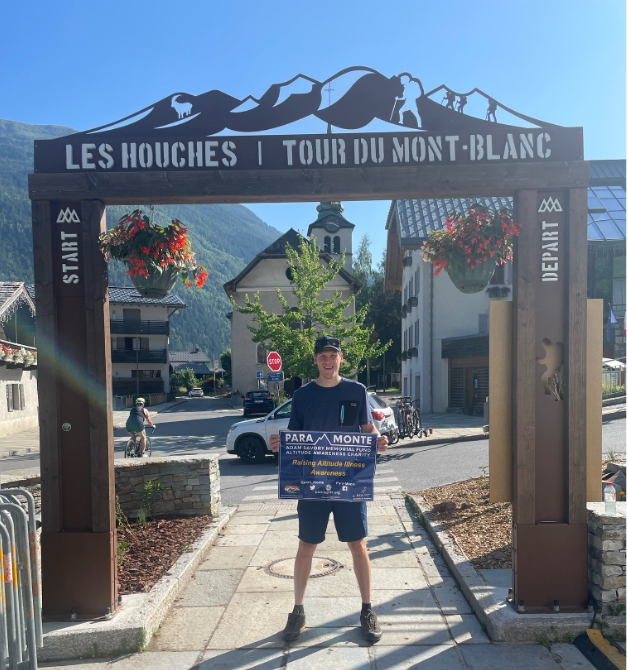
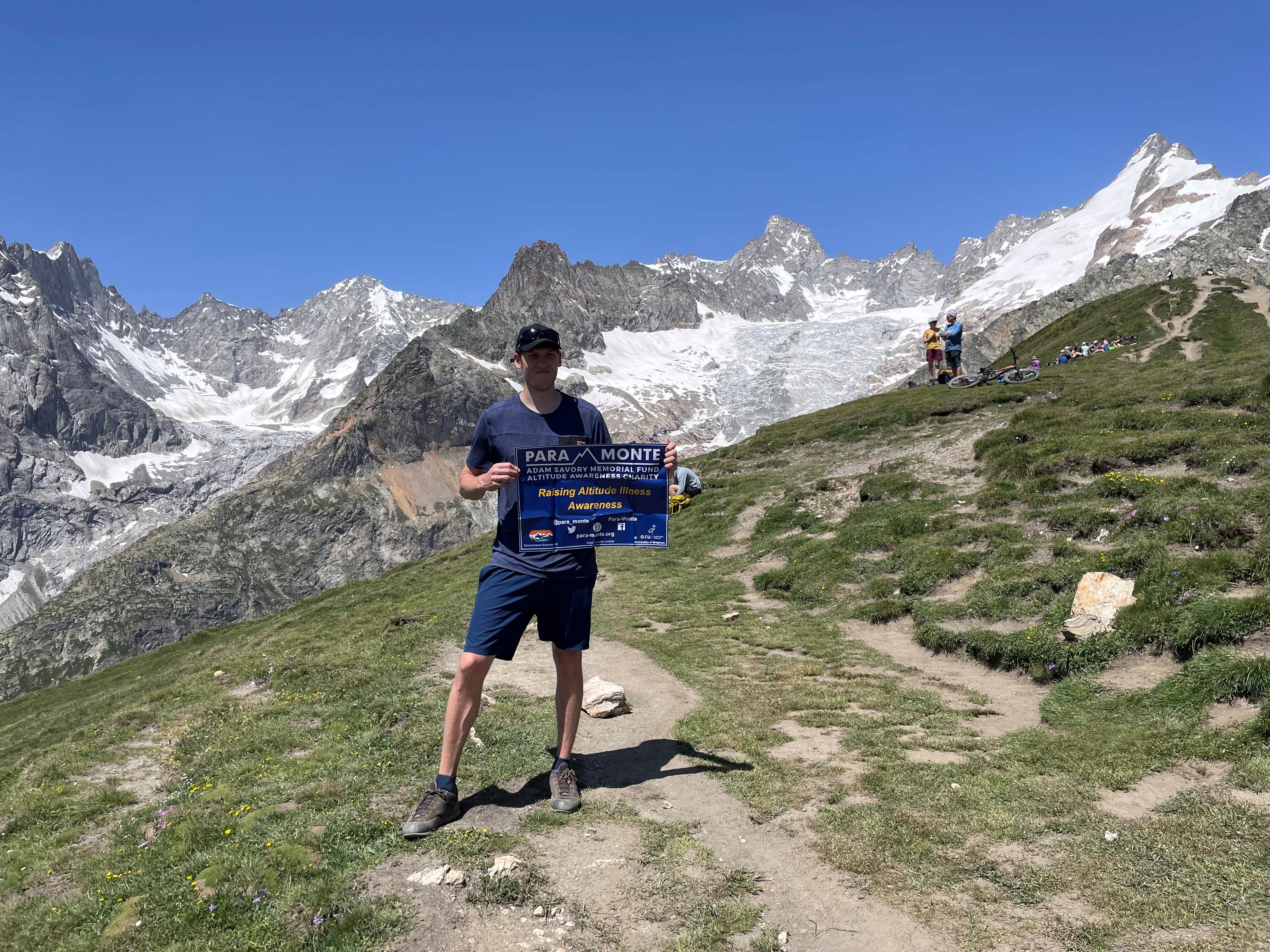
Para-Monte ambassador Fergus Cowley recently completed the iconic Tour du Mont Blanc (TMB), trekking through France, Italy and Switzerland while representing the charity in one of Europe’s premier mountain environments.
Over seven unforgettable days, Fergus circumnavigated Mont Blanc (4,805 m), the highest mountain in the Alps. Along the way he experienced spectacular scenery, challenging mountain terrain and firsthand insights into altitude awareness. Here he shares his reflections, practical advice and lessons learned from the journey.
The Trek at a Glance:
The Tour du Mont Blanc is widely regarded as one of the world’s greatest long-distance hikes, attracting thousands of walkers from across the globe each year.
The route circles Mont Blanc, passing through France, Italy and Switzerland before returning to Chamonix. Although the highest point of the trek, Grand Col Ferret (2,537 m), is well below the elevations associated with serious altitude illness, it is high enough for many people to notice the effects of altitude for the first time, making it an excellent introduction to mountain environments.
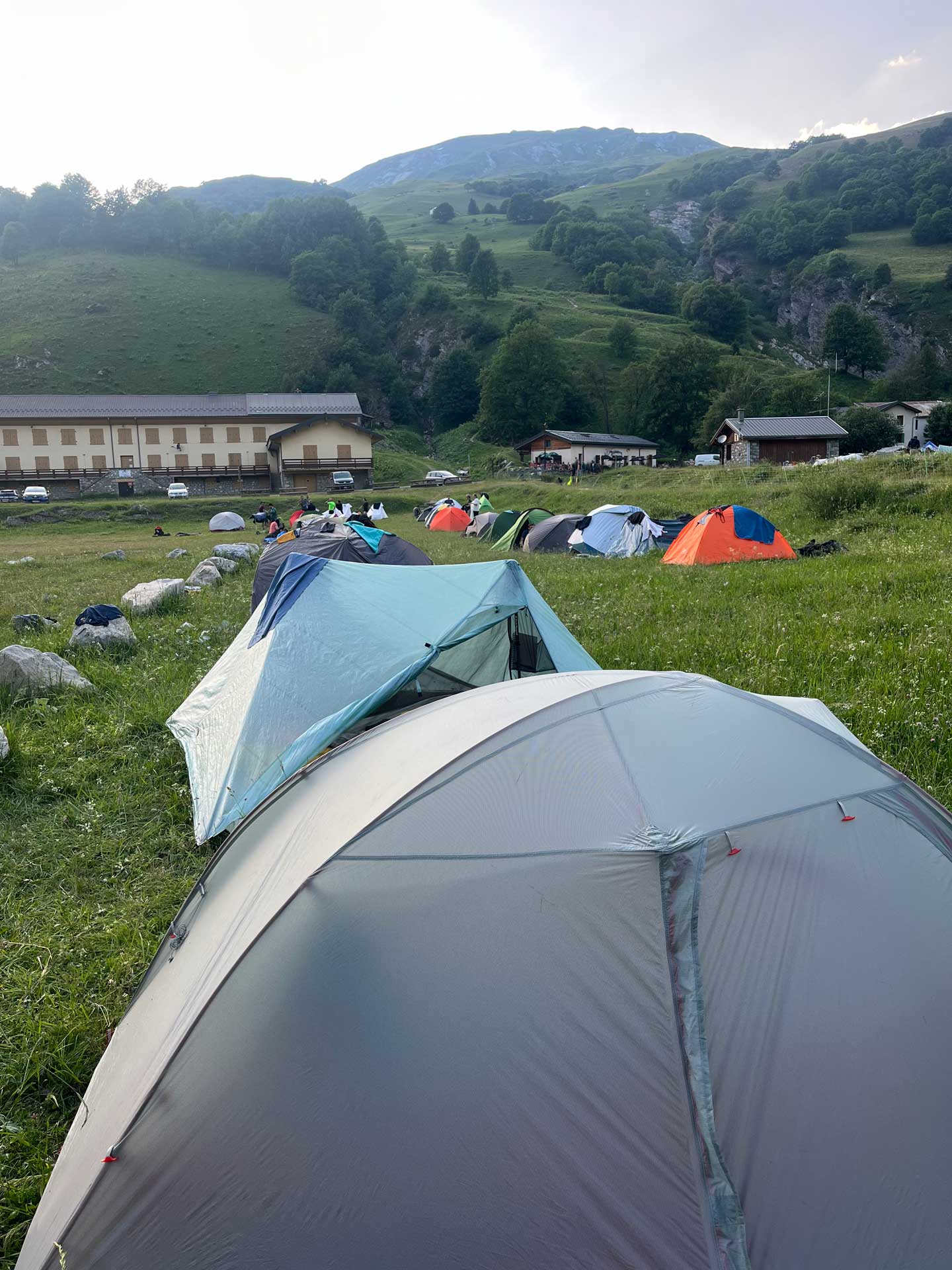
The trek typically takes between 7 and 10 days to complete. Walkers can choose between a fully guided package (typically £2,000+), hiking independently while staying in mountain huts (£900–£1,500), or camping (£400–£600). We chose to hike independently and camp throughout the route.
Days 1–3: France to Italy:
Our adventure began with the optional cable car from Les Houches, quickly gaining elevation and providing spectacular views of Mont Blanc’s glaciers and surrounding peaks. The opening day wound through beautiful alpine meadows and then descended to Les Contamines-Montjoie, where campsites, restaurants and shops provided an ideal first overnight stop.
The following two days became noticeably more remote, villages disappeared, replaced by rugged mountain scenery and welcoming refuges that served hot meals and drinks. Several designated camping areas can be found along this section.
On the third day we crossed Col de la Seigne (2,516 m) and entered Italy. Although this elevation is not high enough to cause altitude sickness in healthy individuals, many walkers will notice subtle effects of altitude exposure, such as an increased heart rate,
heavier breathing and a slower walking pace. After descending into Italy, a shuttle bus provided easy access to the mountain town of Courmayeur.
This section involves approximately 15–20 km of walking each day with around 1,000 m of ascent and descent. The trails are exceptionally well maintained with no technical climbing required, making the route achievable for fit novice hikers with appropriate preparation.
Days 4–5: Italy to Switzerland
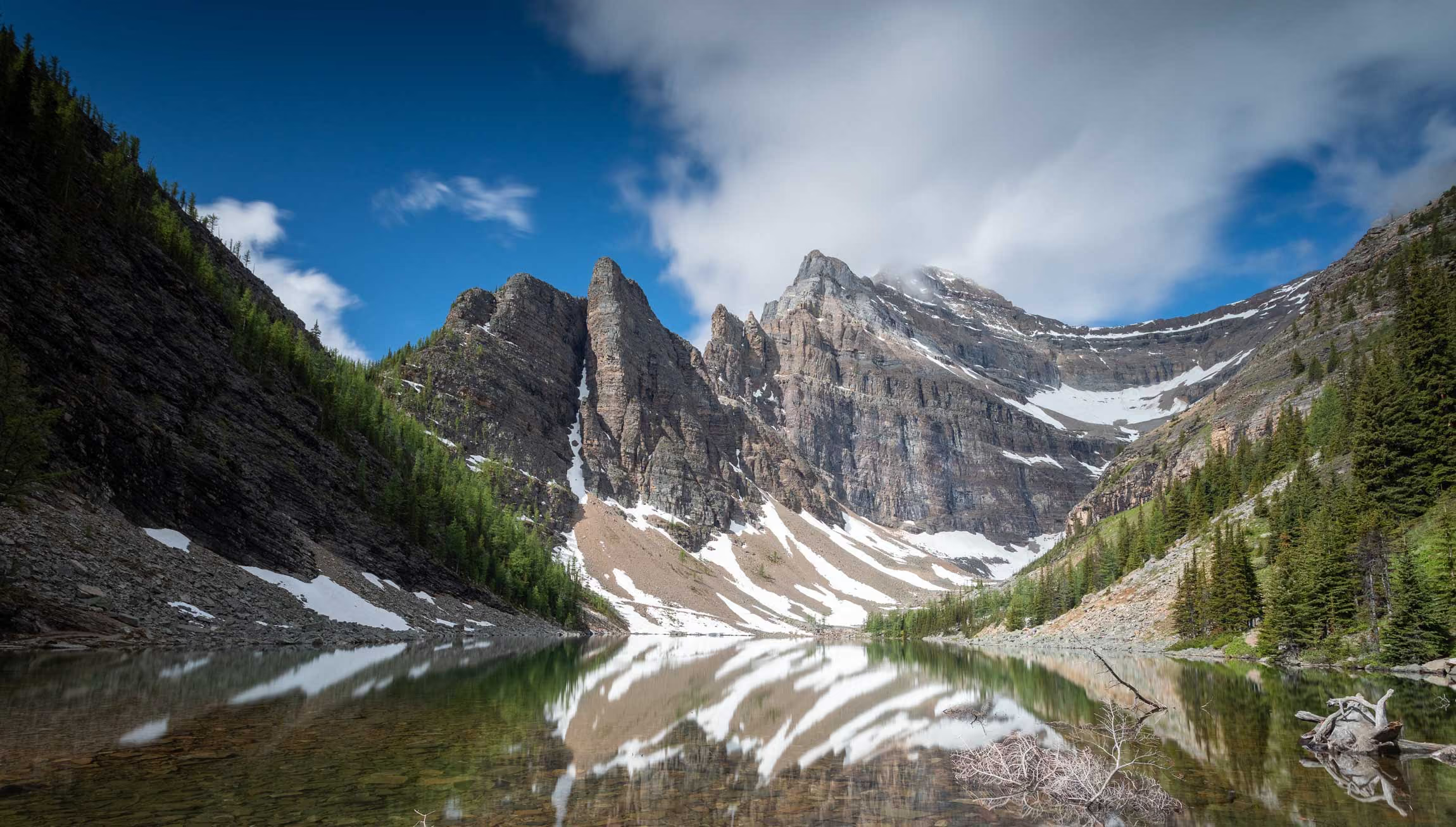
Italy provided two fantastic days of hiking, excellent food and some of the finest views of Mont Blanc anywhere on the circuit. The first day follows high balcony trails overlooking the valley, while the second climbs steadily to Grand Col Ferret (2,537 m), crossing into Switzerland and offering breathtaking panoramic views across both countries.
The first day is relatively gentle, covering around 10 km with approximately 500 m of ascent. The second day is considerably more demanding, involving roughly 20 km and 1,000 m of climbing. Despite the physical challenge, the trails remain straightforward and well-marked throughout.
Days 6–7: Switzerland back to France
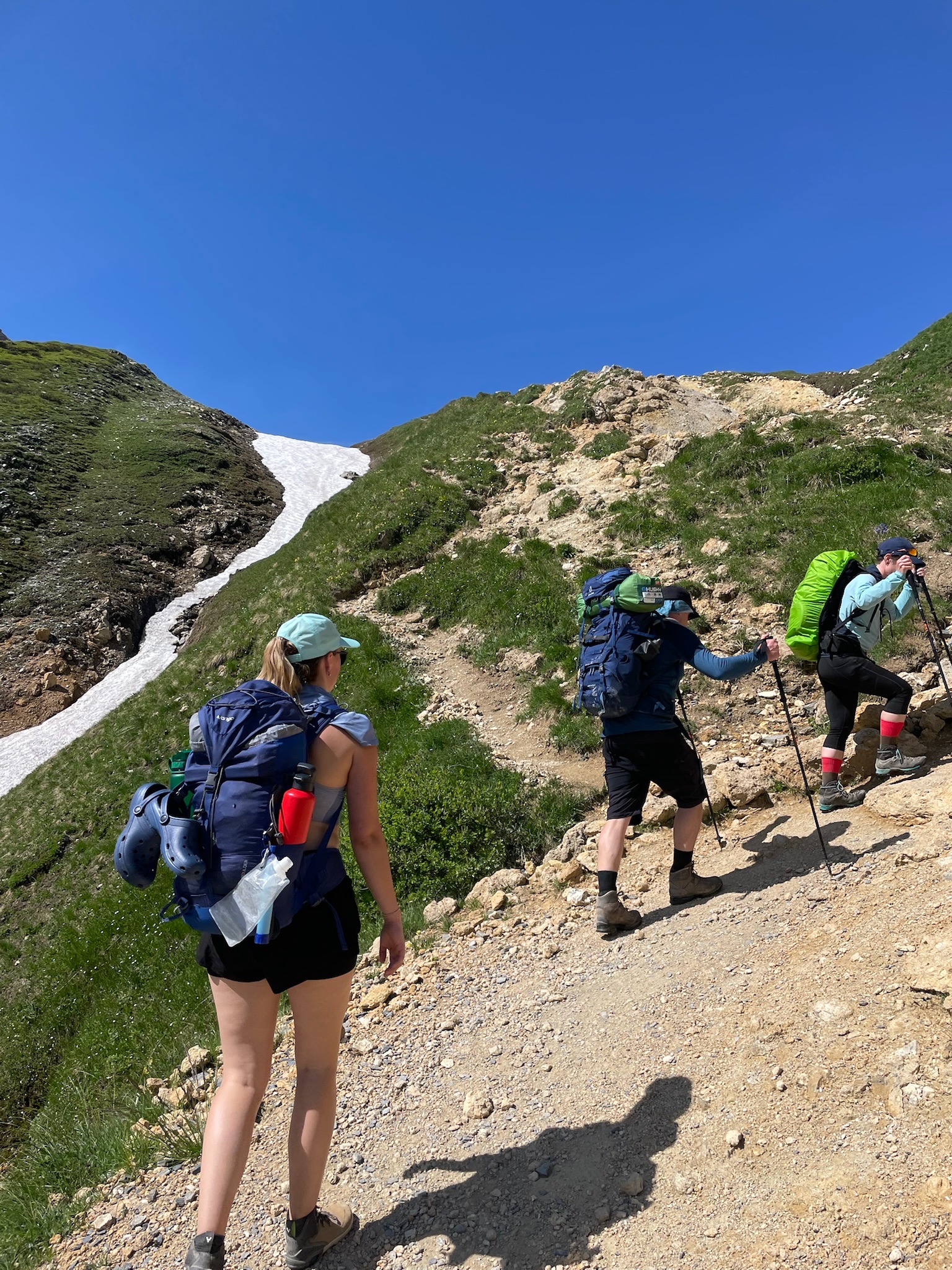
Poor weather on our sixth day meant choosing one of the lower route alternatives, taking us through peaceful forest trails before crossing back into France. For our final day we added a memorable detour to the Albert 1er Refuge, dramatically perched beside the Tour Glacier. This proved to be the biggest climbing day of the trip and included crossing patches of lingering snow from the previous winter. Although we carried micro spikes as a precaution, they were not required during our visit.
Seven days after setting out, we returned to Chamonix tired but immensely proud to have completed one of the world’s classic mountain treks.
What we Learned:
Top Tips:
How to Prepare:
Essential kit
The Tour du Mont Blanc is far more than a scenic walking holiday. It is an unforgettable mountain journey that introduces thousands of people each year to hiking at altitude.
With sensible preparation, respect for the mountain environment and an understanding of how altitude affects the body, it is a challenge that is both achievable and immensely rewarding.
Para-Monte exists to improve awareness of altitude illness and help people enjoy the mountains safely. Hopefully, sharing experiences like these encourages more people to prepare well, recognise the effects of altitude, and make informed descisions in the mountains.
On behalf of all of us at Para-Monte, we like to thank Fergus for completing the Tour de Blanc as well as raising that all important Altitude Awareness!!
The website is dedicated to Adam our son and brother, a fit healthy 25 year old young man, who lost his life to Altitude Sickness whilst travelling in Peru.
Adam’s loss should not be in vain (read his story) and we feel extremely passionate to spread the word about Altitude Illnesses globally, to ensure that people become more aware of the risks and dangers at altitude.
Wishing you a safe onward journey.
Emma, Chris and Jeannet Savory

Sir Ranulph Fiennes served in the British Army for eight years, including a period on counter-insurgency service while attached to the Army of the Sultanate of Oman.
He later undertook numerous expeditions and was the first person to visit both the North and South Poles by surface means and the first to completely cross Antarctica on foot.
In May 2009, at the age of 65, he climbed to the summit of Mount Everest.


